

| Home ::
Museum ::
Founder ::
autobiography | |
| Autobiography
|
||
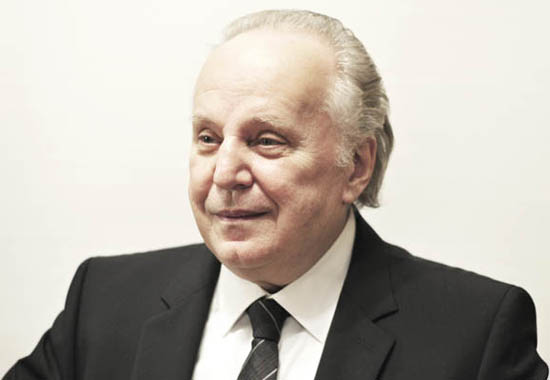 |
Prof. Dr. h.c. rer.nat. Dipl.-Kfm. Thomas Josef WITT was born in Bad Reichenhall at 2.9.1947. In Munich he attended the Oskar von Miller Gymnasium and later studied economics at the Ludwig Maximilian University (LMU). In 2013 the Dr. h.c. rer.nat. was granted to him by the dean of the LMU. In 2014 the "Akademiepreis" of the 'Bavarian Academy of Sciences' was granted to him by Akademiepräsident Prof. Dr. Karl-Heinz Hoffmann. In 2017 he became Professor at the faculty of Entomology of University of Sciences, Techniques and Technologies of Bamako, Mali. |
|
| „Erst bei einer synthetischen Betrachtung von Habitus, Genitalmorphologie, geographischer Verbreitung, Biologie und Verhaltensweise
[und heute der DNA-Analyse]
.... kann einmal eine natürliche Systematik ihre Anwendung finden."
(nach WITT, T.J.-1977. Mitt.Münch.Ent.Ges.66:142.) |
||
Years of study Since 1962, as a schoolboy, WITT has started observing, catching, keeping and collecting of Palerctic butterflies (Rhopalocera), sphinx moths ( Sphinges ) and 'silkworm-like' moths ( Bombyces ) sensu SEITZ I and II. Starting his collection in the vicinity of Munich, soon he and his friend by this task, Peter ZELLER (who then tragically died in an accident at his mid-20es in Nepal), have regularly inspected interesting biotopes at foothills of Alps and in Bavarian mountains. Soon WITT became a Member of Entomological Society of Munich and got into contact with many lepidopterologists and employees of Bavarian State Collection for Zoology, Munich. He had spent a large portion of his free time in Lepidopterology Section of the Institute, where he was glad to provide his help as a volunteer, working together with custodians of that time Franz DANIEL (1895-1985), Josef WOLFSBERGER, Dr. Wolfgang DIERL, Leo SHELJUZHKO and with Director of the Institute Dr. Walter FORSTER (1910-1986) (Obituary see WITT 1988). He had also opportunity to communicate with many native and foreign scientists, who have visited the Institute. Since 1970 until 1997 he has been in charge of booking-office at the Entomological Society of Munich. He had especially strong learner-teacher connection with specialist on Zygaenidae Dr. Karl-Heinz WIEGEL, Munich and specialist on Bombyces and Sphinges Franz DANIEL (Obituary see WITT 1987a), who both included him intimately to his work. Since 1982 Thomas WITT (F.R.E.S.) is fellow of the Royal Entomological Society of London. Goal-setting and specialization The productive cooperation caused DANIEL, who initially thought to bequeath his collection to the Zoological State Collection, to change his mind, already during his life leaving it to WITT, whom he considered as a successor of his studies. Thus, WITT defined the goal of his lepidopterological activity: study of systematics and taxonomy of "Bombyces et Sphinges sensu SEITZ II" under synthetical approach to the their habitus, morphology, geographic distribution, biology, behavior, DNA-analysis and some other characteristics. Previously united by SEITZ under “Bombyces and Sphinges”, these families are not any more considered as a unit, being positioned among different taxonomic groups. Now they belong to either Macro- or Microlepidoptera. Systematic list of the families (after FLETCHER & NYE (1975-1984)), includes the following ones in an alphabetical order: Arctiidae, Axiidae, Brahmaeidae, Bombycidae, Callidulidae, Camptolomidae, Cossidae,Cyclidiidae, Dilobidae, Drepanidae, Endromidae, Epicopeidae, Epiplemidae, Epipyropidae,Eupterotidae, Hepialidae, Heterogynidae, Lasiocampidae, Lemoniidae, Limacodidae, Lymantriidae, Megalopygidae, Nolidae, Notodontidae, Psychidae, Saturniidae, Sesiidae, Sphingidae, Syntomidae, Thaumetopoeidae, Thyatiridae, Thyretidae, Thyridae, Uranidae, Zygaenidae. WITT started a systematic study of the literature on these lepidopteran families, making species cards. DANIEL started monitoring the literature since the appearance of SEITZ Supplement Volume in 1933, putting it in his card index. WITT took this card index and re-sorted it in accordance to author-symbol method, developed by WIEGEL (WIEGEL 1969, Nachrichtenblatt d. Bayerischen Entomologen 18:106-112), and used in his collection. Since 1972, the year when DANIEL stopped his research activity due to the age and gave his collection to WITT, the latter alone has been carrying out the task of systematizing the literature. Cataloging had followed constantly the author-symbol scheme and since 1993 is being supported by specially developed computer software. Therefore, the literature on mentioned families since 1933 until nowadays is substantially systematized. Systematics and corresponding arrangement of species have initially followed the work of SEITZ. However, there have been constant changes due to the new data. WITT collection followed them, as far as possible rearranging material according to modern systematic views, suggested in articles, revisions, monographs and catalogues. Modern state of knowledge on the subject of study The result of the mentioned activity is not only in making the collection of Lepidoptera, which is catalogued for users. The true result, which is in fact a recording of what is known about mentioned lepidopteran families to-date, consists of two components: Collection of lepidopteran specimens (slide preparation) , their conservation and openness to new materials. Various computer based catalogues serve to estimate the slides' collection:
Geographic limits While DANIEL has primarily worked with Palearctic fauna and partially with that of oriental region, WITT added a Nearctic region to the list. Since the beginning of 90th, the data from South America and Africa has also being collected. Historic limits, of course, hinder the systematic study and understanding of families. Sphingidae and Hepialidae have been long collected worldwide, and in all the families there are groups or genera, for which the attempt to produce a document on their world distribution was undertaken, for example, for genera The materials from South-America were steadily increasing with the result that a separate project was launched "Südamerika" The material from Africa also steadily was increasing by taking part in the results of expeditions to Congo, Namibia, Kenya, Tanzania, Southafrica and Madagascar. The results of the Sahara-crossing lepidopterist Harald Sulak from Mauretania and Mali close the gap of knowledge of the distribution in the West as well as the results of his collecting trips from Libya to Ethiopia. The lighttrapping by Dr.Günther Cooperation with specialists Working on such a big number of very heterogenous lepidopteran families in the form, which has been practiced by DANIEL, is no longer possible. Problem statements and methods for different families, along with a lavish quantity of new publications, are more than one specialist can deal with. A rare day with an immense material coming from expeditions elapses without a discovery of new species for the region, previously unrecorded sex for the species, new population, which can be considered as subspecies or new species, or obtaining a new information, which can be a corner-stone in understanding of the problem, on which colleagues are working and should be informed on. The new species in the literature is quite often based on few specimens, whereas more extensive series from various regions, which could greatly improve the description, are available. Therefore, WITT has looked and is looking now for the contacts with lepidopterologists, who devoted themselves to the study of families, represented at the Museum. Past years brought contacts with a number of qualified specialists, who accomplished the study of an immense new material on certain families. Regular cooperation, experiences exchange and co-authorship in publications brought to the Museum so-called "corresponding scientists". Research Associate of McGUIRE CENTER for Lepidoptera and Biodiversity In october 2011 Thomas WITT was elected as a Research Associate of the McGuire Center for Lepidoptera and Biodiversity at the Florida Museum of Natural History, University of Florida, Gainesville. The McGuire Center for Lepidoptera and Biodiversity serves both research and public education functions. The center includes the living Butterfly Rainforest and exhibit space that features information about Lepidoptera and rainforests worldwide, as well as 39,000 square feet of research laboratories and collection space. McGUIRE CENTER for Lepidoptera and Biodiversity, 308 Hull Road, PO Box 112710, Gainesville, FL 32611-2710, U.S.A. homepage McGuire Center for Lepidoptera & Biodiversity Verleihung der Ehrendoktorwürde seitens der Ludwig-Maximilians-Universität München Am 22.November 2013 wurde im Rahmen einer Festveranstaltung in den Räumen der Zoologischen Sammlung des Bayerischen Staates der Titel eines Doktor honoris causa rerum naturalium an Dipl.-Kfm. Thomas J. Witt durch den Prodekan der Fakultät für Biologie der LMU, Prof. Dr. Jörg Nickelsen, verliehen. Die Feier fand in einem festlichen Rahmen statt und nach der Festansprache von Prof. Dr. Haszprunar, Generaldirektor der Staatlichen Naturwissenschaftlichen Sammlungen Bayerns (SNSB), sprachen Dr. Axel Hausmann (ZSM), der aus Ungarn angereiste Prof. Dr. Zoltán Varga (Universität Debrecen) und Prof. Dr. Michael Boppré (Albert-Ludwigs-Universität Freiburg i.Br.). Dieser führte das Auditorium in die Welt südamerikanischer Bärenspinner ein (“Bärenspinner: Gifte, Düfte und mehr”) und eröffnete dabei eine faszinierende Perspektive interdisziplinärer Forschung weit über die Grenzen von Systematik und Taxonomie im engeren Sinne. Der frisch gebackene Dr. h.c. Thomas Witt bedankte sich mit einem leidenschaftlichen Plädoyer für verstärkte Bemühungen zur Erfassung und zum Erhalt der Biodiversität unserer Erde und zeigte auf, welche rechtlichen und organisatorischen Rahmenbedingungen geeignet und nötig sind, um die internationale Zusammenarbeit in der Forschung und den Aufbau von Forschungssammlungen zu begünstigen. Die beiliegende Fotoauswahl zeigt einen Überblick über die Gäste der Festveranstaltung. Verleihung des Akademiepreises 2014 Am Samstag, 6. Dezember 2014 fand im Herkulessaal der Münchner Residenz die Jahresfeier der Bayerischen Akademie der Wissenschaften in Anwesenheit von Staatsminister Ludwig Spaenle statt. Daran anschließend wurden durch Akademiepräsident Prof. Dr. Karl-Heinz Hoffmann sechs Preise verliehen, unter anderem an Dr. h.c. Thomas J. Witt wegen seiner Verdienste um die Erforschung von Schmetterlingen und seines herausragenden Engagements zur Förderung wissenschaftlicher Projekte im Bereich der Biodiversitätsforschung. mehr Informationen über Verleihung des Akademiepreises 2014 Verleihung des Ranges und Titels Professor in Entomology seitens der Universität Bamako In 2017 he became Professor at the faculty of Entomology of University of Sciences, Techniques and Technologies of Bamako, Mali. Genera (5) Wittia De Freina (Arctiidae) Wittstrotia Behounek & Speidel , 2005 (Noctuidae) Wittocossus Yakovlev , 2004 (Cossidae) Wittonola László, Ronkay & Ronkay , 2014, (Nolidae) Wittinia VOLKOVA, 2017, in litteris Species (32) Thibetana witti Efetov (Zygaenidae) Peridea witti Schintlmeister (Notodontidae) Wernya witti László & Ronkay (Thyatiridae) Neotogaria thomaswitti László & Ronkay & Ronkay (Thyatiridae) Epipsestis witti László & Ronkay & Ronkay (Thyatiridae) Saturnia (Rinaca) witti Brechlin (Saturniidae) Phantosoma witti Kostjuk & Zolotuhin , 2000 (Lasiocampidae) Neostilbina witti Thoeny , 2000 (Noctuidae) Smerinthulus witti Brechlin , 2000 (Sphingidae) Lymantria witti Schintlmeister ,2004 (Lymantriidae) Ethmia thomaswitti Kun , 2004 (Ethmiidae) Utetheisa (Pitasila) witti De Vos , 2006 (Arctiidae) Phocoderma witti Solovyev , 2007 (Limacodidae) Semagystia witti Yakovlev , 2007 (Cossidae) Actias witti Brechlin , 2007 (Saturniidae) Holcocerus witti Yakovlev & Saldaitis & Ivinskis , 2007 (Cossidae) Idiovulpecula witti Karisch (Arctiidae, Lithosiinae) Diachrysia witti Ronkay & Ronkay & Behounek , 2008 (Noctuidae) Caio witti Brechlin & Meister , 2010 (Saturniidae) Neochalcosia witti Buchsbaum & Chen & Su , 2010 (Zygaenidae) Automeris witti Brechlin & Meister , 2011 (Saturniidae) Adelowalkeria witti Brechlin & Meister , 2011 (Saturniidae) Typhonia witti Sobczyk , 2012 (Psychidae) Graptasura witti Bucsek , 2012 (Arctiidae) Eucraera witti Prozorov , in litteris (Lasiocampidae) Ortopla witti Behounek & Han & Kononenko , 2013 (Noctuidae) Calliteara witti Trofimova & Shovkoon , 2016 (Lymantriidae) Nola thomaswitti László, Ronkay & Ronkay, 2014 , (Nolidae) Carriola witti SHOVKOON (in litteris) (Lymantriidae) Scopelodes witti SOLOVYEV & GIUSTI , 2017 (Limacodidae) Lithosarctia witti VOLYNKIN & SALDAITIS, 2018 (Arctiidae) Nephelomilta thomaswitti VOLYNKIN & CERNY , 2018 (Arctiidae) Subspecies (8) Zygaena filipendulae witti Wiegel (Zygaenidae) Dendrolimus pini witti De Freina (Lasiocampidae) Trichiura verenae witti Ganev (Lasiocampidae) Eilema albicosta witti Kobes , 1993 (Arctiidae) Poecilocampa populi witti De Freina (Lasiocampidae) Laothoe philerema witti Eitschberger & Danner & Surholt (Sphingidae) Clanis deucalion thomaswitti Eitschberger , 2013 (Sphingidae) Cyana (Ideovulpecula) pretoriae witti Karisch , 2013 (Arctiidae) Personal publications Keeping in mind mentioned above, we understand, why publications of WITT (see Autobiography ) are not defined by the specialization, but filled with a rich data on different families or represent an attempt of outlining a general picture. We should mention some projects of particular importance: "Bombyces et Sphinges of Western Palearctic" , series "Moths of Vietnam with special reference to Mt.Fan-si-pan" as well as publication within the framework "Insects of Israel" . Furthermore Thomas Witt is founder of the WITT CATALOGUE, a series of about 60 volumes on Noctuoidea planned to be published within the forthcoming 25 years: „The Witt Catalogue - A taxonomic Atlas of the Eurasian Noctuoidea”. In 2014 he founded the book series “Proceedings of the Museum Witt“ in cooperation with the State Nature Research Centre in Vilnius, Lithuania. |
||